
Growing up, there was always an apron hanging on the hook by the kitchen door. It wasn’t for decoration, Mom actually wore the thing, every single time she baked. It was faded from a hundred washes, the ties frayed, it had seen more flour than most bakeries see in a year.
That apron was part of the kitchen, like the rolling pin or the good mixing bowl. Whenever that apron came off the hook, I knew something yummy was coming. Depending on the time of year it could be Moms strawberry rhubarb pie.It was the armor protecting Mom from butter flying off the beaters, and flour puffing up in a cloud every time she sifted. And don’t forget the Rhubarb juice, bright pink and stubborn, splattering wherever it pleased.
Nowadays you don’t find many aprons on the wall in kitchens, mostly they get treated like a cute prop, a novelty gift or something you tie on for a photo. But back in the day of the housewife they were practical, no-nonsense, and built to be worn everyday! And somehow, as utilitarian as they were, they still managed to be pretty with a cheerful print, a ruffled edge, a pocket just deep enough for a stray recipe card.
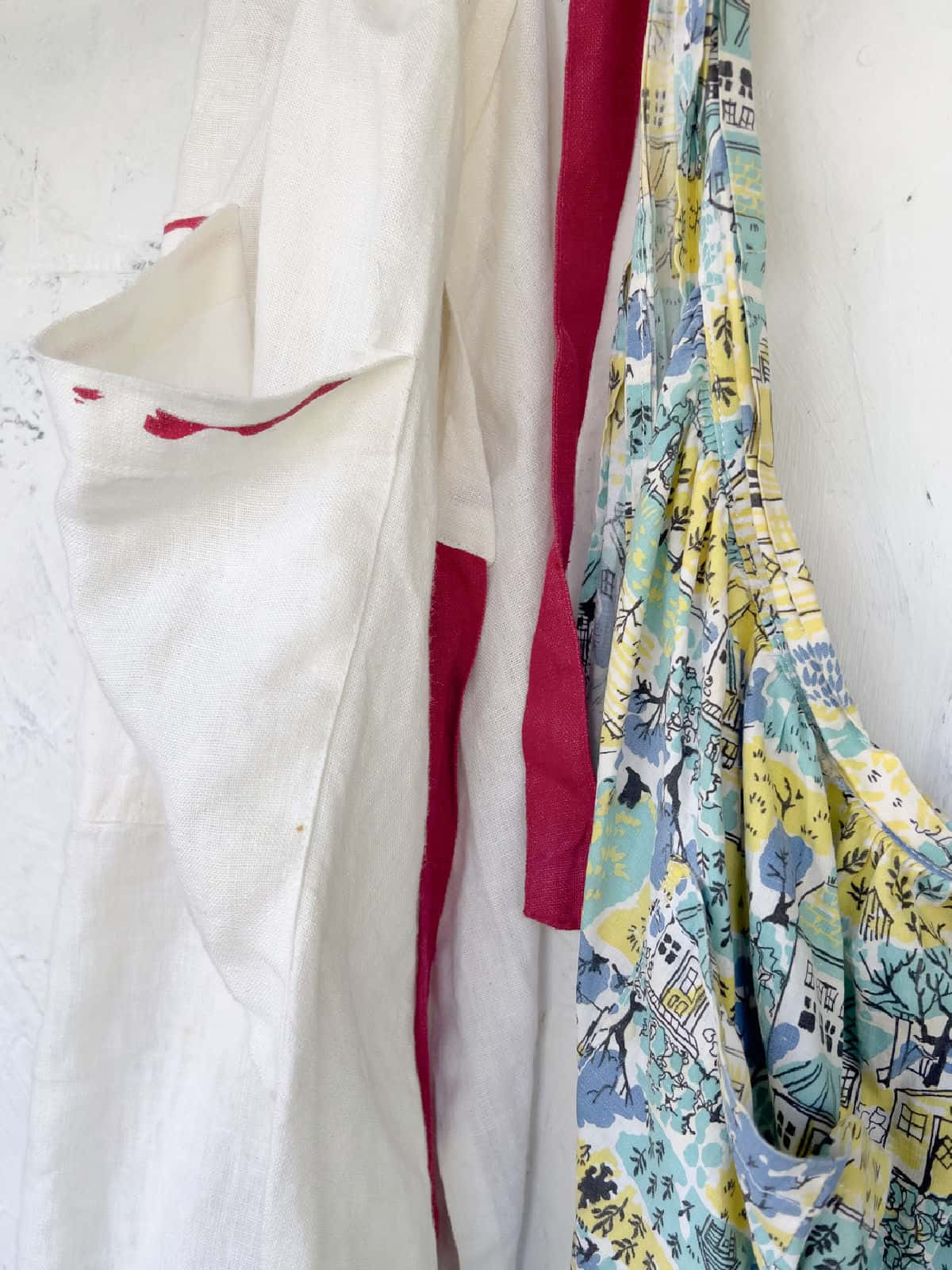
First the Apron, Then Came the Pie
Here’s her strawberry rhubarb pie recipe. Ready to make your own, then first grab your apron then head on over to the recipe post.
First the Apron, Then Came the Pie
Whenever that apron came off the hook, I knew something yummy was coming. Depending on the time of year it could be Moms strawberry rhubarb pie.
Wait, wait, you say you don’t have an Apron, say it ain’t so! Okay we can fix this.
Making Your Own Apron
If all this apron nostalgia has you wanting one of your own, you’re in luck it’s incredibly easy to make one and no sewing machine needed.
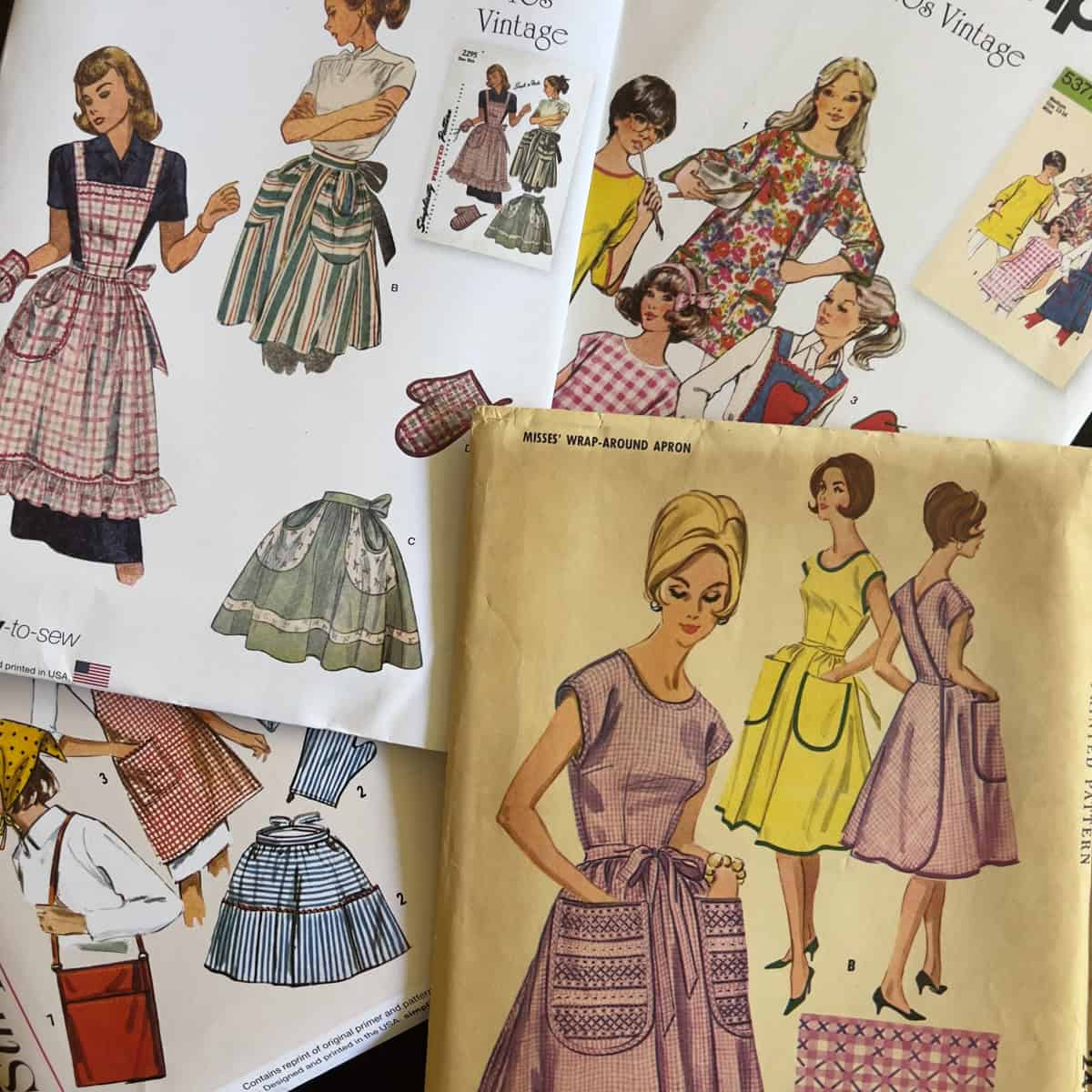
Sew one from a vintage pattern.
Old apron patterns are everywhere once you start looking, they are tucked into estate sale boxes, sold as PDFs from vintage pattern shops, sometimes even printed in old church cookbooks alongside the recipes themselves. Half-apron patterns from the 1940s and 50s are wonderfully simple: straight seams, a gathered skirt, maybe a pocket. Perfect for hand sewing, since there’s nothing fussy or curved to fight with.
Reconstruct one you already have.
If you’ve got an old apron of your own or one that belonged to your mother or grandmother that’s seen better days, consider giving it a second life instead of starting from scratch. A worn tie can be replaced. A stained pocket can be patched with a scrap of coordinating fabric. A hem that’s come loose is nothing a simple running stitch can’t fix. There’s something quietly wonderful about mending an apron by hand, the same way it once helped someone else through years of kitchen messes.
Either way, keep it simple. These aprons were never meant to be precious , they were meant to be used. Splattered, stained, faded, and loved. That’s how you know it did its job.
Let me know your Apron story in the comments.